What is the tradeoff between knowledge skill and leadership skill for leaders? I’ll give you a lawyer’s answer: It depends. Depends on what?
My barber for the last five years or so has been a horse-riding grandma named Genie. She cuts hair Monday-Friday and rides on Saturday-Sunday with her granddaughter. Genie has a one-chair barbershop. She has no employees. I go to her because I like the way she cuts my hair (no comments, please). I don’t give a rip what kind of leader she is. She needs a large dose of knowledge skill—almost no leadership skill.
However, if Genie decided to expand, add another barber or two, or even another shop or two, then her need for leadership skill would increase. If she was the senior leader at Supercuts (over 2000 shops), then leadership skill would be paramount; she wouldn’t need to know much at all about how to cut hair (though it would help if she did).
When I migrated (in 2000) from aerospace (large/complex) to a Gulf Coast commercial shipyard (small/simple by comparison), I learned the hard way that my leadership skill wasn’t enough. To be successful, I needed a lot more knowledge about the maritime business. This story did not have a happy ending.
You must have the knowledge skill appropriate for your job. And you must have the leadership skill appropriate for your job. In small/simple organizations, the leader’s knowledge skill is most important. In large/complex organizations, the leader’s leadership skill is most important.
It’s important for you to know where you are on the knowledge/leadership scale. Which do you need the most of? The questions you are asked by employees will tell you. “How” or “Help” questions require knowledge to answer. “What” or “Why” questions require leadership to answer.
Get this right, and your Leadership FICO Score will increase; good for you and for the organization.
If this post was interesting and useful, please forward it to friend.
Copyright 2015 by Dick Wells, The Hard Lessons Company
The Leadership Credibility series (click to read):
 As I was walking the factory floor one day: “Mr. Wells, could I talk to you for a minute?”
“Please call me Dick. What’s up?”
“Well….”
He was a brake press operator (you don’t need to know what a brake press is to get the leadership credibility principle here). The short version is another piece of equipment was located such that he could not operate his brake press in the most efficient and productive way. If the other machine could be moved a couple of feet, then he could be more productive, less frustrated, etc.—all good for him and the company. The machine was too heavy for him to move and I happened to be walking by (being available and visible), so….
It was a chance for me to be more than just visible (8/21 post) and available (8/29 post), it was a chance for me to be useful, to make a difference. I made a call, the machine was moved that day, and my leadership credibility soared with that employee and all those who heard the story.
Being honest, visible, available, and personable are great aids to raising your Leadership FICO Score (8/10 Post). But there’s more to it than that—add being useful to the list—do something that makes a difference in the employee’s workday. It doesn’t have to be grand and expensive: fix a water cooler or broken chair; replace burned out lights; make sure their workplace is cleaned regularly. The leader’s job is a lot more than “be likeable and look good.” Those will wear thin rapidly.
Employees are on the job every day; most are trying to do their best in spite of less than ideal working conditions. Most don’t expect ideal working conditions. However, there is almost always something you can do—however small—that will impact their workday for the better.
Look around. If office 201 was yours, what would you want to do? Would a rubber pad make a difference for an employee who is on his/her feet all day? Is the air conditioner—or heater—adequate? How about moving some clutter—or a machine—out of the way?
Now I realize that some things are expensive and can’t be done now or ever. But do something! It will demonstrate you are a leader who cares and listens and I promise, your credibility as a leader will rise.
Why don’t you go find something to do for an employee today? How about right now?
If this post was interesting and useful, please forward it to friend.
Copyright 2015 by Dick Wells, The Hard Lessons Company
The Leadership Credibility series:
Your Leadership FICO Score
Be Honest
Be Visible
Be Available
Be Personable
 In his great book, True North, Bill George says “People today demand personal relationships with their leaders before they will give themselves fully to their jobs.” Do you agree with that? I do. The starting point for a “personal relationship” is simply, Be Personable.
If you are the leader, people want to know you. And, they want to be known by you. They want to know what you do on Saturday (fish, football, or flowers), but more than that, they want to tell you about their kids, hobbies, church, or crazy uncle. They want you to know they are more than Employee #7933 (my number at Bell Helicopter years ago).
Being personable doesn’t mean becoming best friends. It means listening, being interested, being kind, being ________ (you fill in the blank).
A couple of requirements for being personable are:
#1 You have to get out of your office.
#2 You have to invest some one-on-one time with people.
#3 You can’t fake it. If you are just going through the motions because you read this blog, they’ll know.
#4 You can’t pollute “being personable” time with organization issues and problems.
The alternative to being a personable leader is being a jerk boss. Which will prompt your employees to “give themselves fully to their jobs”? You know the answer, so….
Relationships take time. You can spend time, or invest time. Be Personable time is the most important time you invest.
Be Personable is #4 on the path to leadership credibility. How are you doing on the first three: Be Honest (8/14 post); Be Visible (8/21 post); Be Available (8/29 post)?
If this post was interesting and useful, please forward it to friend.
Copyright 2015 by Dick Wells, The Hard Lessons Company
6 September 2015
 To the people you are trying to lead or influence (employees, customers, congregation, etc.), what is more important: your ability or your availability? Yes, I know you’re busy, but if you are so busy you aren’t available when they need you, your leadership credibility will suffer.
The foundation of leadership credibility was integrity: Be Honest (8/14 post). Second was Be Visible (8/21 post). Third on the list is Be Available. What your followers want most is your time, not your brain—they have one of their own.
Almost all leaders say they have an open door policy. For those that really do have one:
The door will actually be open.
People will feel free to walk in.
The admin staff doesn’t feel that their primary job is shield the leader from the minions.
When people do walk in, the leader gives full attention and listens to what they have to say.
Office location and arrangement is part of the Availability equation:
“When I arrived in Nashville, the company had a long dark 1940s style “mahogany row.” It was separated from the factory by a sign on the door: OFFICES. In other words, “Don’t enter unless summoned”—like when you were in junior high school. Fortunately, our change-for-the-better-oriented president got rid of the sign, and although we didn’t spend the money to get rid of mahogany row (prohibitively expensive because of so much asbestos in the walls, ceilings, etc.), he did mandate that our office doors were to be open at all times unless we were having a truly confidential conversation. It is surprising how such a simple thing changed the look of the hallway from a “restricted area” to just another hallway where the president happens to spend his time.” (Excerpt from 16 Stones, chapter 12.)
Get a can of WD-40, lubricate the hinges on your door, then open it—really. You’ll be surprised at how your credibility will rise.
If this post was interesting and useful, please forward it to friend.
Copyright 2015 by Dick Wells, The Hard Lessons Company
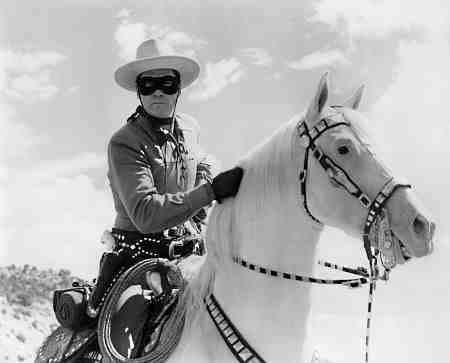 Most of you are too young to remember, but in the fifties (I said you were too young), The Lone Ranger was a hit ABC TV western. The script was simple: The Lone Ranger (face hidden by a mask) and his sidekick, Tonto, rode into a town just in time to save an aging rancher and his always beautiful daughter from losing their ranch to a heartless banker who held the mortgage that was delinquent because all the cattle had been rustled by—you guessed it—rustlers working for the banker. The show always ended the same way—The Lone Ranger breaking the daughter’s heart by riding into the sunset as she asked, “Who is that masked man?”
“Who is that masked man?” was great (?) television, but it’s lousy leadership. In your quest for leadership credibility (see previous posts), being seen and known is a big deal. Ivory tower, seldom-seen leaders have little credibility. Employees need to know you by sight. You don’t want to hear, “Who is that masked man?” when you are walking about.
When I became president of The Aerostructures Corporation in 1994, I made it a practice to walk the factory floor and the offices several times a month. My predecessor had rarely walked through the factory, so being on “their turf” was new to them. Their reaction? “It sure is nice to see the president out here.”
Here’s the rub: I hadn’t done a thing except roam around, say hello, and ask how they were doing. The result? I started gaining credibility in their eyes. Is that easy or what?
The #1 step (last week’s post) to increase your leadership credibility was to Be Honest. #2 is Be Visible. Anybody can do this. You just have to decide to get out of your office and be willing to get some dirt on your shirt or blouse.
If this post was interesting and useful, please forward it to friend.
Copyright 2015 by Dick Wells, The Hard Lessons Company
 From the last post: “…more than anything, people want leaders who are credible. Credibility is the foundation of leadership….” (Kouzes & Posner, The Leadership Challenge)
If credibility is the foundation of leadership, what is the foundation of credibility? What one thing do all leaders with a high LEADERSHIP FICO score have in common? What does leadership credibility rest on and rely on? The answer: integrity. Integrity is the foundation of credibility. You cannot have credibility without it.
You can have great vision; without integrity it means nothing.
You can be a terrific communicator; without integrity it means nothing.
You can be a strategic thinker or great planner; without integrity it means nothing.
People may follow you because they have to, but they won’t follow you because they want to unless you have integrity.
About 3500 years ago, God gave us three simple rules for integrity in the Ten Commandments:
#7—don’t cheat
#8—don’t steal
#9—don’t lie
Follow those three rules in everything you do and your integrity will be fine.
The standard of integrity in any organization is set by the leadership and becomes part of the organization’s culture. However, it is not what you say, it is not written slogans, it is what you do that matters. John Maxwell says it this way: “What people need is not a motto to say, but a model to see.”
Cracks in foundations usually start small and grow until the structure can be in danger of collapse. Cracks in integrity usually follow the same pattern: office supplies taken home for personal use, inflated expense reports, illegal copies of books, or an extra hour or two of overtime claimed.
It’s important to remember that integrity is much more than not getting caught. Solomon tells us that “The man of integrity walks securely, but he who takes crooked paths will be found out.” Your standard of integrity should be much higher than not being “found out.”
Billy Graham once said: “When wealth is lost, nothing is lost; when health is lost, something is lost; when character is lost, all is lost.”
Why don’t you patch your integrity cracks today, before you lose it all?
If this post was interesting and useful, please forward it to friend.
Copyright 2015 by Dick Wells, The Hard Lessons Company
 In your personal financial life, a good FICO score is essential—it is your credit-ability score. Credit cards, mortgages, car loans, even job opportunities are dependent upon or influenced by your FICO score. Above 750±, you’ll get the fastest approvals and the lowest rates. Below 600±, you’ll get high rates or nothing at all. Your FICO score is a reflection of your intent to repay and your ability to repay. In other words, trust and confidence in you are wrapped up in your FICO score.
Leaders have a credit-ability score also—it is your Leadership FICO Score. It measures your credibility as a leader. Is it important? Oh, yes.
“…more than anything, people want leaders who are credible. Credibility is the foundation of leadership…. Loyalty, commitment, energy and productivity depend upon it.” (Kouzes & Posner, The Leadership Challenge)
“…if he has not built credibility with his people, it doesn’t really matter how great a vision he has.” (John Maxwell, Ultimate Leadership)
Every day, your employees show up and decide how much of themselves they are going to give you. You are paying for their hands, their labor, their knowledge. They owe you that because you are giving them a paycheck. But you need more. You need their hearts and their heads—their best. Employees don’t give their best to the company—they only give their best to you. They will decide to give you their best based on your Leadership FICO score—your credibility. What is leadership credibility?
Leadership credibility is the combination of trust and confidence that motivates people to follow and work for you—all in, giving their best—because they want to, not because they have to.
Companies don’t have credibility—people have credibility. People do not trust companies. They trust people. People do not have confidence in companies. They have confidence in people. Your company (or department) does not have credibility apart from your personal credibility. To your employees, when it comes to credibility, you are the company or church or college or….
You do not have leadership credibility because of your position. To have credibility, you have to work for it, because credibility has to be earned. You earn credibility by what you do and who you are, not by your title or what you say.
Credibility is the single most important attribute/characteristic of leadership. Without it, you can’t lead; you can only be a boss. So how do you earn it? Stay tuned—that’s where we’ll start in the next post.
If this post was interesting and useful, please forward it to a friend.
© Copyright 2015 by Dick Wells, The Hard Lessons Company
 I will be in Florida next week for the You Can’t Get Away World Championship. “You Can’t Get Away” is one of the favorite games of my three grandsons. I grab one of them, wrap up his arms and legs in a contortionist-hold from which “in the recorded history of earth and ESPN, no one has ever escaped.” I then scream, “You can’t get away!” and it’s game on—pulling, twisting, giggling, and smelly socks are all fair. (Tickling isn’t.) You can tell from their smiles, they always do get away, even if it takes a little help from a brother.
Leaders have to play You Can’t Get Away all the time. That’s why leading isn’t for everyone. As a leader, you can’t get away from:
People—leaders get things done through people. If you’d rather “do it myself”—leading isn’t for you.
Change—that isn’t a light at the end of the tunnel, it’s the change train headed straight at you. If you don’t like change, leading isn’t for you.
Results—you aren’t in a leadership position to look good and take up space—you are there to get results. If you don’t want accountability for results, leading isn’t for you.
Disasters—the unexpected will happen: things break, customers leave, mistakes are made, the worship leader gets sick, and so on. If you don’t like the stress of dealing with the unexpected, leading isn’t for you.
Criticism—every leader gets criticized. If you don’t have a thick skin, then leading isn’t for you.
Spotlight—you are in spotlight 24/7. Everything a leader does or says is spotlighted. If you want anonymity, leadership isn’t for you.
_______________________—you fill in the blank by sending me a comment. What is it as a leader you just can’t get away from? Let me know.
Leading is one of the most challenging and rewarding roles of organizational life. But it’s only for those who can thrive in a You Can’t Get Away environment. If you are looking for safety and clocking out at 4:30, leading isn’t for you.
If this post was interesting and useful, please forward it to a friend.
© Copyright 2015 by Dick Wells, The Hard Lessons Company
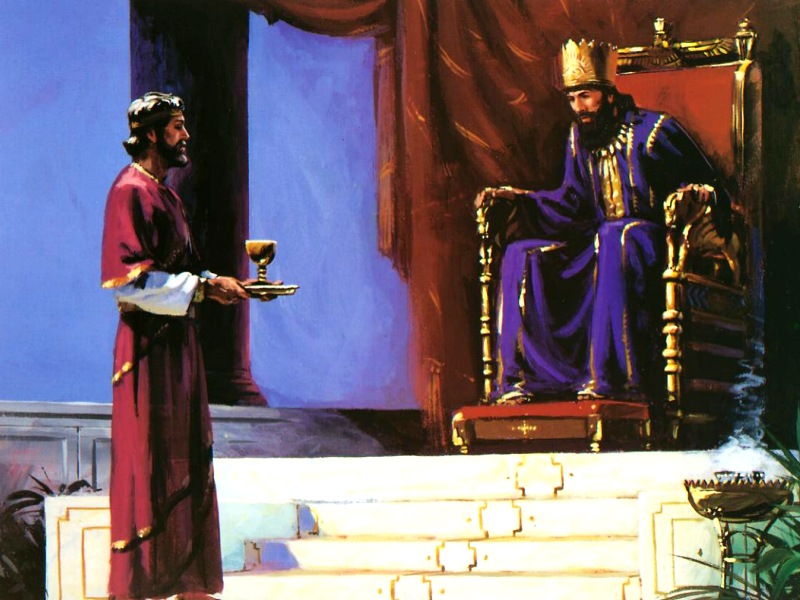 Have a crazy idea that the boss (or king or CEO or Senior Pastor or….) will have to approve? Nehemiah is a good example to follow.
The following passage is an excerpt from chapter 5 of 16 Stones. Order info at 16 Stones Order Info]
Getting to YES is a long-term, best-selling book (more than 10 million copies in more than thirty languages) first published in 1981 . The subtitle is Negotiating Agreement Without Giving In. In spite of the subtitle, this useful book is actually intended to lead to what we today call “win-win” outcomes. As Nehemiah entered the king’s chamber, he didn’t have a copy of Getting to YES, and it wouldn’t have helped if he did. Why? Because kings don’t negotiate with their servants. Nehemiah had to use a different approach, one that is a great leadership case study on how to approach a king, CEO, manager, or senior pastor with what seems to be an outlandish request. We can learn a lot from examining how Nehemiah petitioned the king:
He was respectful—“May the king live forever” and “If it pleases the king….” He honored the king’s position, making it clear that he was asking, not demanding. There is no better example in all the Bible of Proverbs 22:11 in action: “He…whose speech is gracious will have the king for his friend” (NIV).
He was honest—“Why should my face not look sad when the city where my fathers are buried lies in ruins, and its gates have been destroyed by fire?” He didn’t skirt the issue. He was open and aboveboard. Importantly, he answered the exact question the king asked.
He was clear, concise, and specific—“…send me to the city in Judah where my fathers are buried so that I can rebuild it.” Kings, CEOs, managers, and others in positions of authority are busy. They don’t have all day to listen to a rambling request. The best communication is always clear (simple, unambiguous), concise (few words, to the point), and specific (defining exactly what the request is).
He was prepared—“Then the king, with the queen sitting beside him, asked me, ‘How long will your journey take, and when will you get back?’ It pleased the king to send me; so I set a time.” Nehemiah had anticipated questions and was ready with answers.
He was unselfish—“The city where my fathers are buried lies in ruins, and its gates have been destroyed by fire.” There was not one self-centered thing about Nehemiah’s request. The king could easily have been incredulous: “You want to do what?” Instead, “it pleased the king to send me” (Nehemiah 2:6 NIV). Actually, Nehemiah got more than he asked for: “The king . . . also sent army officers and cavalry with me” (Nehemiah 2:9 NIV). Not a bad outcome for a cupbearer who entered the king’s chamber when “very much afraid.”
If this post was interesting and useful, please forward it to friend.
© Copyright 2015 by Dick Wells, The Hard Lessons Company
 …because I don’t know what it tastes like.” That line comes from a Silk Almond milk ad. When it comes to food, it reminds me of me. I’m not very adventurous when it comes to food—not much for exotic sauces or spices (except chili, of course). Give it to me “straight up.” I suppose I am missing out on a lot of tasty dishes, but we have fewer pots and pans to wash and I’m sure not wasting away at my waistline.
That attitude may be okay for food preferences, but it is fatal for organizations whether businesses, churches, schools or whatever. “I don’t want to change” is a sure route to unemployment, early forced retirement, declining sales, lower enrollment, or aging congregations.
Need examples?
Kodak invented digital photography but they didn’t taste it because their #1 sales/profit machine was film.
Just a few years ago, Blackberry owned the smartphone market (60% market share) but they wouldn’t taste a touch-screen keyboard, so today, Blackberry is irrelevant.
A couple of current examples are:
In 2015, Millennials will be the largest generation in the workforce and the smallest generation in churches. Organizations better taste and like or get ready for high turnover (because you can’t lead Millennials like Boomers), or empty pews (because they won’t stick with a 1990’s or 80’s or 70’s style church).
Women now lead (as the CEO) 26 Fortune 500 corporations including mega-corps GM, IBM, Lockheed, Hewlett-Packard, Pepsi, and Oracle. If you are part of “good ol’ boy” organization and don’t like how that tastes, you’ll go the way of the dinosaurs within a generation.
I don’t know what your organization’s Silk Almond taste challenge is, but you probably have one. If you are the leader, it’s your job to taste it. If you don’t…. (I wonder if I can buy a thimbleful of Silk Almond milk?)
If this post was interesting and useful, please forward it to a friend.
© Copyright 2015 by Dick Wells, The Hard Lessons Company.


The Hard Lessons Company
© 2014-2020
All rights reserved.
337 Whitewater Way
Franklin, TN 37064
615-519-3765